The way businesses view global sourcing has changed in recent years. Geopolitical disturbances and regional conflicts have created a multitude of supply chain challenges. Fluctuating freight, changing trade, and a shortage of raw materials have all shown that relying on only one sourcing market exposes businesses to financial and operational risk. Because of this, procurement executives have begun to focus on sourcing strategies that incorporate resilience alongside cost optimization.
In this context, Vietnam has become one of the leading complementary sourcing markets. Vietnam boasts a developing industrial base alongside a multitude of FTAs, manufacturing, and exporting capabilities. Because of these factors, Vietnam has become an appealing sourcing market, especially when enhancing supply chain flexibility and decreasing the reliance on a sole country.
In the end, an appealing manufacturing market is only one of the factors when adding new suppliers or relocating production. Diversification of supply chains is only successful when there is supplier qualification, management of quality, evaluation of factories, and, most importantly, planning of the procurement.
This paper focuses on the reasons for the diversification of supply chains among global corporations and the ways Vietnam substantiates that diversification, the competitive edges that Vietnam offers apart from manufacturing cost, and the steps that purchasers must take to relocate their production.
Why Global Businesses Are Diversifying Supply Chains
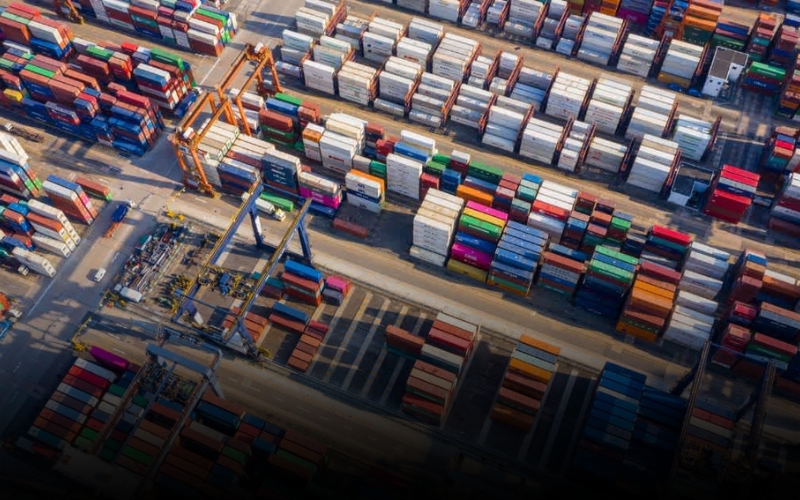
Global supply chains have been impacted by changes in the economy. The last few years have shown how quickly new problems can impact production and trade. Supply chains have been impacted by the pandemic, lack of semiconductors, shipping issues, and geopolitical problems. Companies of all kinds are dealing with higher costs, delays, and less supply chain visibility.
Because of these problems, companies have been less dependent on one country for supplies.
Benefits for companies have been reduced because companies have relied on one country for supplies. Companies have relied on one country for supply chains because it is easier for them. This has led to large problems for these companies. Companies that have relied on one country for supplies have also disrupted trade. If a country changes export regulations, companies have then faced large problems. Companies are limited in their options.
Because of the problems mentioned, companies have started to use different countries to source supplies. Companies are creating networks of different countries to source supplies. This is done to protect the company.
A good example is the China Plus One strategy. This strategy keeps a supply chain route in China and adds new countries like Vietnam to the supply chain.
When a company has suppliers in a lot of different countries, they are able to adjust to changing conditions. If a certain country is hit with a logistics disruption, production can continue in other countries of the supply chain.
International organizations strengthen the case for this strategy.
The World Economic Forum’s Global Risks Report 2025 would find that geopolitical tensions, fragmented trade, climate-driven disruptions, and economic volatility remain concerns for business activities worldwide. These disruptions reinforce companies’ global efforts to build resilience in their supply chains by broadening their supply networks.
The World Bank also points out that trade networks and supply chains that are flexible and diversified are more essential to global trade. Changing customer expectations are another reason for diversification.
Market disruptions and the need for business continuity during disruptive times have caused customers to evaluate manufacturers based on their capability to meet deadlines in order fulfillment as well as their quality and pricing.
This shifts the market from a risk management perspective to competitive advantage.
Companies are also asking questions beyond where they manufacture for the lowest costs. They are asking questions related to where they can develop flexible, dependable, and resilient supply systems that are sustainable and capable of supporting long-term business needs.
In this context, Vietnam has become one of the most attractive sourcing alternatives.
Vietnam as a Strategic Complementary Sourcing Base
Vietnam’s manufacturing output has made great progress in the past twenty years. Once a nation of only labor-intensive industries, now higher-value sectors have been introduced due to improvements in foreign capital, industry, and trade.
According to the General Statistics Office (GSO), the processing and manufacturing industries have been some of the most important sectors propelling Vietnam’s economic growth and export performance. Manufacturing plays a crucial role in Vietnam’s economy as it has the largest share of the country’s industrial output.
Vietnam’s growing attractiveness also stems from the deepening integration of foreign trade.
As part of many different free trade agreements (FTAs), including the Comprehensive and Progressive Agreement for Trans-Pacific Partnership (CPTPP), the Regional Comprehensive Economic Partnership (RCEP), the EU–Vietnam FTA (EVFTA), and the UK–Vietnam FTA (UKVFTA), Vietnam has better access to foreign markets and lower tariffs for a number of products while strengthening its position in the global manufacturing value chain.
Greater diversification of the manufacturing sector has occurred in Vietnam compared to most countries, which tend to specialize in the lower number of product areas.
Vietnam has particularly strong exporting capability in furniture manufacturing and supplies a large number of markets, including North American, European, Japanese, and Australian markets. Vietnam’s indoor and outdoor, office and living, and design and decor furniture is sourced from global brands and private label companies.
Manufacturing in the textile and garment sector is still of great importance. Domestic suppliers produce textile and garment products, including clothes and shoes, technical textiles, and garment accessories for global retailers. There is a growing focus on high value and sustainable manufacturing in this sector as well.
Rapid growth is observed in electronics manufacturing.
The level of foreign direct investment in Vietnam continues to improve the country’s manufacturing capabilities, particularly electronics manufacturing. The Foreign Investment Agency (FIA), under the Ministry of Finance, and the UNCTAD World Investment Report identify Vietnam as one of the most favored Southeast Asian countries for manufacturing investment. Manufacturing foreign direct investment (FDI) continues to focus on developing the industry in Vietnam, increasing manufacturing capacity, and improving the transfer of technology.
Vietnam’s biggest advantage is not the complete takeover of another sourcing market.
Rather, it provides complementary sourcing options, additional manufacturing capacity, increased production flexibility, and manufacturing location flexibility. A greater sourcing differentiation approach simultaneously reduces concentration risks for related supply chains.

The Business Value of Sourcing from Vietnam
Although global buyers still value competitive manufacturing costs, they do not rank them in the same position for reasons to expand sourcing in Vietnam.
Currently, they consider resilience and flexibility to be of equal importance.
Including Vietnam in a larger sourcing strategy allows a business to mitigate reliance on a singular market for business manufacturing. Vietnam can be leveraged to ease disruption by shifting a product line to balance the manufacturing challenges in another country by increasing purchases from capable suppliers in Vietnam.
This flexibility helps ease disruption in business when there is a sudden change in the demand.
A sudden increase in demand, a seasonal surge in sales, or the introduction of a new product can overwhelm suppliers and stress manufacturing commitments. Businesses that are able to diversify their manufacturing networks are able to meet manufacturing commitments more effectively.
Vietnam helps ease reliance on singular sourcing.
For intricate and complex products, Vietnamese OEMs are able to build long and strategic alliances. Manufacturing a line of customized products is possible by working with private label manufacturers. Components and packaging for the finished goods may be sourced from manufacturers that cater to export markets.
Because flexibility in manufacturing exists in Vietnam, it can balance a company’s global sourcing.
Vietnam’s competitiveness is helped by advanced infrastructure.
Vietnam is making significant government investments in expressways and deepwater ports along with industrial parks and logistics centers. Ports such as Hai Phong and Cai Mep–Thi Vai are helping to serve Vietnam’s expanding exports.
The Asian Development Bank (ADB) and the World Bank state that ongoing investment in transport and logistics infrastructure is further consolidating Vietnam’s regional manufacturing and trade position.
For companies, this means that diversification cannot be equated simply with capital relocation to lower-wage countries.
The greatest long-term benefits come from the ability to adapt to shifting economies, consumers, and market conditions.
Integrating Vietnam into a larger sourcing strategy provides companies with more operational flexibility and better business continuity. Such benefits provide a more favorable long-term outcome relative to short-term cost savings.
Building a Successful Sourcing Strategy in Vietnam

Although manufacturing in Vietnam has clear advantages, successful sourcing is reliant on preparation and not just on the decision to relocate production.
The first step is always supplier qualification.
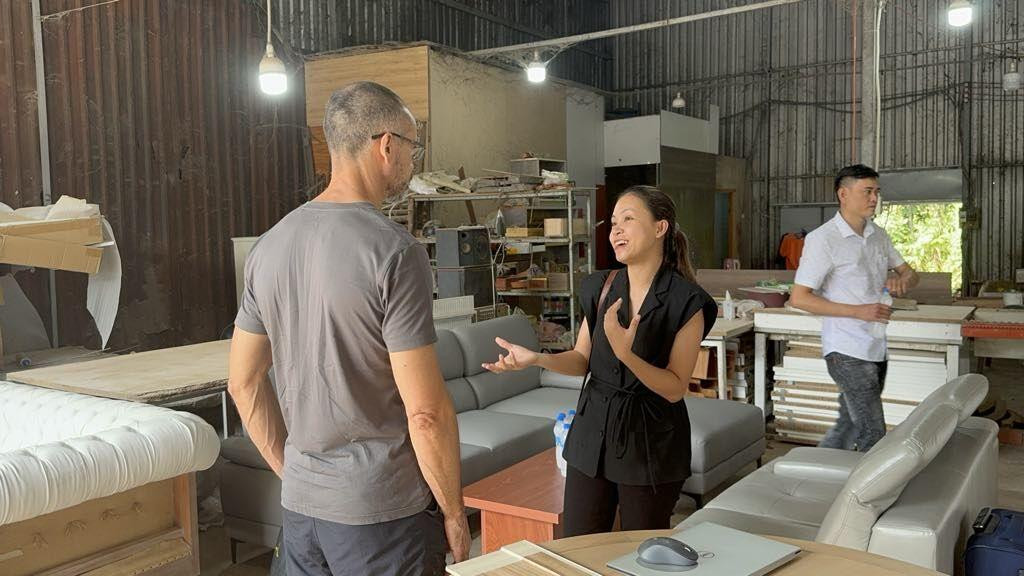
Potential suppliers are evaluated based on a range of criteria from capability to manufacture to export readiness, as well as their financial viability and ability to conform to international standards. This should be coupled with the evaluation of their quality management systems and technical capabilities.
In addition to a range of industry certifications, for example, ISO 9001, ISO 14001, IATF 16949, or ISO 13485, there should be a more thorough evaluation of potential suppliers. Certifications will provide some assurance but are not a substitute for supplier evaluation.
As the most effective way to assess a potential manufacturing partner, factory audits should be retained.
Site visits are the most effective way to assess a potential partner’s production, their equipment, their workforce, and their quality systems. They also provide the most effective way to assess potential partners for their capabilities and the most effective way to assess the potential partner’s capability for continual improvement.
The assessment of supplier resilience should also be undertaken.
Examples of good questions are the following:
- What is the supplier’s capacity for increased demand?
- Where do the supplier’s critical raw materials come from?
- What is the supplier’s own supplier network diversity?
- What are the supplier’s business continuity plans?
- What are the production quality and traceability systems?
The assessment should focus on the supplier’s immediate capability and also the supplier’s long-term operational stability.
The development of good supplier relationships should not be viewed as a series of one-off transactions.
Good supplier relationships should be strengthened by regular contact and supplier performance assessments and the provision of technical support. The focus of the relationship should be on supplier improvement. The development of good supplier relationships should also be done with the focus on a supplier’s evolving needs and the supplier’s improvement in terms of meeting the requirements. At the same time, businesses should avoid creating new concentration risks.
Some companies mistakenly view Vietnam as a complete replacement for their existing sourcing markets. In reality, relying too heavily on any single country creates the same concentration risk. A more resilient strategy is to build a diversified supplier network across multiple countries while continuously monitoring supplier performance and market conditions.
Diversification of sourcing suppliers is a strategy that is best executed when suppliers are vetted, relationships with suppliers are developed and deepened, and the market is constantly being surveyed.
While Vietnam makes itself available to do business, and US companies are using that availability to their advantage, the value of such transactions will be lost if the sourcing strategy is not well thought out.
Conclusion
The need for resilience in supply chains has grown in parallel with the growing complexity of global supply chains. As the effects of logistics, trade policy, production capacity, and geopolitical issues can all be negatively felt with a single-source supply chain, many businesses are now diversifying the sources of their supply chains.
Vietnam is creating a niche in the global supply chain as a strategic sourcing nation by combining many elements. These elements include an improving base for manufacturing, a growing infrastructure, and an integration into the global supply chains. These elements and more allow Vietnam to provide countries with many export manufacturing sectors. These range from industrial components to textiles and more.
The diversification of a supply chain is more than the relocation of production. This requires a new source of supply chain partners to be thoroughly vetted, their manufacturing capacities and quality controls to be assessed, and a new partner ecosystem that supports both flexibility and business continuity to be developed.
Vietnam is a strong supply chain sourcing option for many businesses, as the country possesses all the components for competitive manufacturing while providing an opportunity for businesses to bolster supply chain resilience.