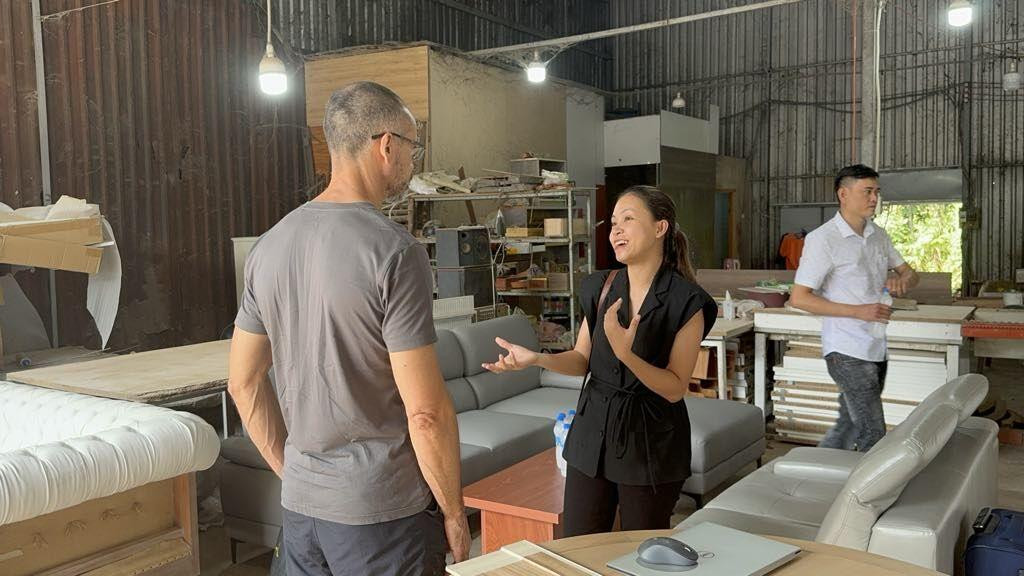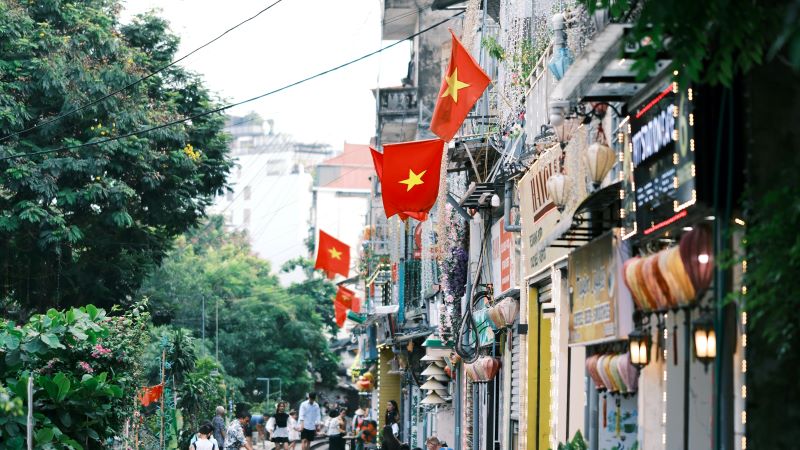
Ho Chi Minh City anchors Vietnam’s export-facing ecosystem across apparel, furniture/wood, plastics, and electronics, supported by dense supplier clusters and buyer-oriented trade shows. The city hosts fairs, a magnet for global furniture and home buyers, underlining HCMC’s gateway role for export sourcing.
Buyers new to Vietnam routinely face hurdles around factory vetting, AQL-based quality control, MOQs, social/environmental compliance, and logistics/lead times : areas where a capable local sourcing partner reduces risk and cycle time.
For several years now, Vietnam has established itself as a prime alternative to China, both for production and sourcing. At the heart of this evolution, the economic capital, Ho Chi Minh City, plays a central role, attracting more and more foreign buyers.
For textiles, furniture, electronics, and plastics, brands seeking to secure their supply chains while reducing costs are turning to HCMC. As a result, the city has gradually established itself as a key destination for sourcing companies in Vietnam in 2025.
A significant economic weight supported by high-quality infrastructure
The southern Vietnamese metropolis was Vietnam’s leading export city in 2024, according to the Ministry of Industry and Trade.
Nationally, Vietnamese exports reached USD 262.4 billion in the first seven months of 2025, confirming Vietnam’s position among the major players in global trade and presenting the country as a competitive and reliable sourcing destination.
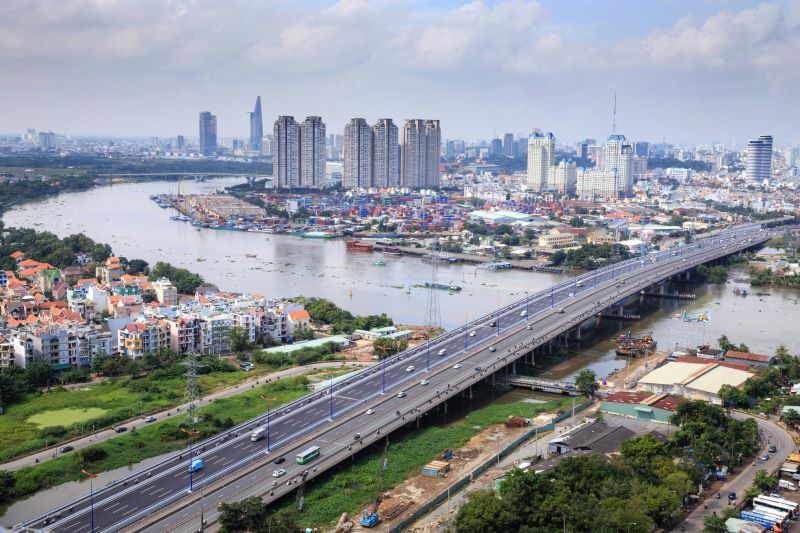
In terms of infrastructure, HCMC has many advantages: its maritime access via the port of Saigon makes it the only city capable of handling container ship traffic, Tân Sơn Nhất Airport is the busiest in the country and the city has several specialized industrial zones such as Saigon Hi-Tech Park and Quang Trung Software Park that support advanced technologies.
These multimodal infrastructures boost the efficiency of sourcing and deliveries, a compelling argument for sourcing companies looking to expand into Vietnam.
HCMC Neighbooring Manufacturing Powerhouses
South Vietnam, particularly the provinces surrounding Ho Chi Minh City (HCMC), has cemented its reputation as Vietnam’s premier manufacturing and economic engine, collectively known as the Southern Key Economic Region (SKEZ). These provinces offer a winning combination of established industrial infrastructure, strategic logistics, and a vast labor pool, making them a top choice for Foreign Direct Investment (FDI) in Asia.
The manufacturing heartland is concentrated in four key provinces adjacent to Ho Chi Minh City.
Binh Duong Province
Binh Duong is arguably the most developed and mature industrial hub in the South, often synonymous with Vietnam’s manufacturing success.
* Core Sectors: A powerhouse for furniture/wood processing, textiles and apparel, and the production of technical textiles, plastics, and precision machinery.
* Key Industrial Parks: Home to world-class industrial zones like the Vietnam-Singapore Industrial Park (VSIP) I & II and My Phuoc Industrial Park.
* Logistics Advantage: Its proximity to HCMC’s ports allows for quick and efficient cargo handling, often within a 35-minute drive.
Dong Nai Province
Located to the east of HCMC, Dong Nai is a major industrial center known for its scale and specialization in high-volume, global supply chains.
* Core Sectors: Leading producer of footwear (hosting factories for major global brands), performance apparel, plastics injection, and electronic components.
* Key Industrial Parks: Major complexes include Amata City Bien Hoa Industrial Park and numerous others that benefit from the area’s robust infrastructure.
* Logistics Advantage: Excellent road connectivity and is strategically positioned near the future Long Thanh International Airport, which is set to transform its air freight capabilities.
Long An Province
Situated strategically between HCMC and the Mekong Delta, Long An is rapidly emerging as a preferred location, offering a balance of lower costs and accessibility.
* Core Sectors: Attracting new investment in garments, packaging, and food processing seeking more competitive operating costs than the immediate HCMC metropolitan area.
* Key Industrial Parks: Significant growth in industrial park development, leveraging its abundant land reserves. Phuoc Dong Industrial Park is a notable large-scale complex located near the HCMC border.
* Cost Advantage: Land costs are significantly lower than HCMC, yet it maintains good road access to major southern ports.
Ho Chi Minh City (HCMC)
While land and labor costs are the highest, HCMC remains the financial, commercial, and logistical nerve center, hosting specialized, high-value manufacturing.
* Core Sectors: Focus on high-tech electronics assembly (anchored by the Saigon Hi-Tech Park – SHTP), precision metal fabrication, plastics molding, and a dense network of supporting industries and specialized services.
* Logistics Advantage: Houses major logistics infrastructure, including the Cat Lai Port and Hiep Phuoc Port, which collectively handle a vast percentage of the country’s container traffic.
Commuting from Ho Chi Minh City to Manufacturing Clusters
Commuting from Ho Chi Minh City to the industrial parks in the surrounding provinces is a daily reality for a large workforce and is facilitated by various transport modes.
By Car or Taxi/Ride-Sharing
This is often the fastest and most flexible way for business-related travel.
- To Binh Duong: Industrial zones in the south of Binh Duong (like VSIP I) are very close, often taking 30-45 minutes from HCMC’s center via National Highway 13, depending on the starting point and traffic.
- To Dong Nai (Bien Hoa City Area): Travel time to areas like Bien Hoa is typically 45-60 minutes via the Hanoi Highway and National Highway 1A.
By Train (Limited)
The main train line runs from HCMC through the industrial areas, offering a low-cost, traffic-avoiding alternative for some specific zones.
A short train ride from Saigon Station to Di An Station (Binh Duong) or Bien Hoa Station (Dong Nai) is available, usually taking less than an hour. However, this often requires an additional taxi or company shuttle to the final industrial park.
By Public and Company Bus
This is the most common method for the large labor force.
- Inter-provincial Bus Routes: Several public bus routes directly connect HCMC’s major bus stations (like Mien Dong or An Suong) to cities like Bien Hoa (Dong Nai) and Thu Dau Mot (Binh Duong). These are very affordable but slower due to multiple stops.
- Private/Company Shuttles: Most large manufacturing companies provide dedicated bus and van services for their employees, offering door-to-door or central pickup/drop-off services to and from major residential areas in HCMC and the surrounding provinces.
By Motorcycle (Personal Commuting)
The dominant mode of personal transportation in Vietnam. While subject to heavy traffic, it offers the ultimate flexibility for daily commutes across provincial borders. The major roads connecting HCMC to Binh Duong (NH13) and Dong Nai (Hanoi Highway/NH1A) are constantly busy with this traffic.
A dynamic and competitive environment, ideal for sourcing companies
The city has a very dynamic environment, particularly through the regular organization of trade fairs and exhibitions that facilitate networking, for example between buyers and sourcing companies.
To cite just two examples, particularly geared towards sourcing companies, the HCMC Export Fair 2025 was held in March and brought together more than 1,000 stands covering textiles, leather, furniture, etc., with around 50,000 visitors, mainly professionals. The most important trade show for sourcing companies is held in Ho Chi Minh City: the Vietnam International Sourcing Expo, which will take place from September 4 to 6, 2025.
This type of trade helps increase the city’s visibility as a major sourcing hub in Vietnam and even internationally.
Due to its location in Vietnam, the city has competitive advantages as the country benefits from trade agreements such as the EVFTA with the United States and the RCEP, which expand access to European and Asian markets.
Ho Chi Minh City is establishing itself as one of the most attractive sourcing hubs in Southeast Asia, combining state-of-the-art infrastructure, manufacturing diversity, professional events, and openness to global markets.
Below you will find the leading sourcing companies based in HCMC.
Listed sourcing companies in HCMC and methodology :
- Sourcing Notes
- MoveToAsia
- Sourcing Agent Vietnam
- FVSource
- Deloitte
- KPMG
- VietnamSourcingTeam
Companies are evaluated based on their capabilities, sector coverage, presence in Ho Chi Minh City, responsiveness/language support as indicated on their public pages, and references (case studies, associations, or exhibition listings).
Advice to buyers : make a shortlist of 2-3 agents, request comparable quotes and quality control/AQL plans to find the best sourcing company for your projects.
Profiles of the leading Vietnam sourcing companies in HCMC
Sourcing Notes : sourcingnotes.com
Sourcing Notes offers sourcing solutions across Vietnam and ASEAN, specializing in SMEs that need hands-on guidance from supplier search to final inspection. The company provides due diligence, quality control management, and warehouse or consolidation support.
The company emphasizes streamlined processes for small to mid-sized buyers, ensuring that QC and logistics are handled efficiently.
Although its workflow is clearly defined for SME clients, detailed case studies, formal audit documentation, and pricing structures are not publicly available, meaning buyers should confirm specifics during initial consultations.
MTA (MoveToAsia) : movetoasia.com
MTA (MoveToAsia) operates from Ho Chi Minh City and focuses on connecting international buyers with verified suppliers in Vietnam, with a strong emphasis on the furniture, textile and garments, electronics, steel sector.
From supplier sourcing and product development to company formation and HR support, MTA (MoveToAsia) company provide end-to-end solutions to help businesses expand, avoid costly mistakes, and succeed in the Asian market, focus on Vietnam.
While the company demonstrates strong local knowledge and furniture sourcing expertise, formal audit frameworks, pricing, and minimum order quantities are not publicly disclosed, so buyers are encouraged to discuss specific requirements directly.
Sourcing Agent Vietnam : sourcingagentvietnam.com
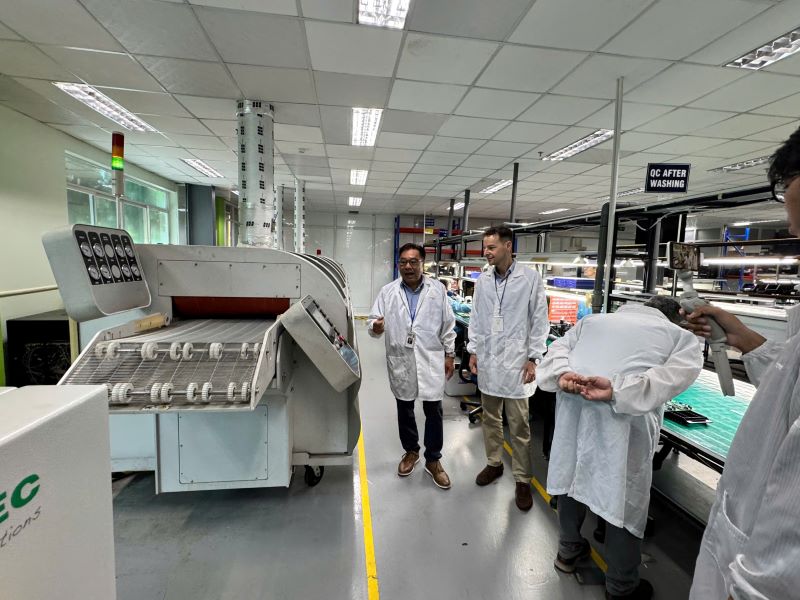
Sourcing Agent Vietnam has six years of experience assisting international buyers with sourcing and production in Vietnam. The company provides product sourcing, due diligence, and factory tours, with bilingual support in English, French, and Vietnamese.
SAV serves categories such as electronics, textiles, garments, indoor and outdoor furniture, and home décor. The firm is recognized for its responsive, SME-oriented approach, offering guidance for first-time buyers entering the Vietnamese market.
While enterprise-level compliance frameworks, pricing tables, and AQL templates are not publicly disclosed, SAV’s hands-on support and educational content make it a strong choice for startups or mid-sized companies.
KPMG : kpmg.com
KPMG has a long-standing presence in Vietnam and approximately two decades of operational experience. The firm offers comprehensive sourcing and supply chain programs, including supplier identification and qualification, outsourced buying office services (covering production planning, supervision, QA, storage, and shipment), and consulting or audit support.
Its case studies cover packaging, industrial parts, and lighting projects. With a supplier base exceeding 7,500 qualified contacts and multi-country ASEAN coverage, KPMG is particularly suitable for mid-market and enterprise buyers seeking a structured approach to sourcing.
The firm’s multi-industry expertise and scale make it a robust partner for complex sourcing programs.
FVSource : fvsource.com
FVSource is a Vietnam outsourcing/consulting agency focused on bridging Western buyers with Asian manufacturing. It can help for supplier selection, factory tours, quality-control management and due diligence.
FVSource help businesses expand operations by managing production outsourcing, supplier sourcing, and local setup. From finding reliable manufacturers to establishing your local presence, FVSource ensures a smooth, cost-effective, and compliant entry into the Asian market.
Vietnam Sourcing Team : vietnamsourcingteam.com
Vietnam Sourcing Team offers comprehensive sourcing solutions across Vietnam, covering supplier search, factory verification, sample management, quality control, and logistics coordination through to final delivery. According to its website, the company works with a network of more than 1,500 factories.
The firm highlights an “all-in-one” model, providing international buyers with a local team in Ho Chi Minh City that “looks after their interests on the ground” : a valuable asset for companies seeking to outsource their supply chain operations with reliable local oversight.
Although the site lists starting rates, detailed case studies, full audit report samples, or a complete pricing grid are not publicly available. Buyers are therefore encouraged to clarify service terms, fees, and deliverables during the initial consultation.
Deloitte Vietnam : deloitte.com
Deloitte Vietnam is an international audit and consulting firm, backed by the extensive Deloitte network across the Asia-Pacific region.
Its services cover Audit & Assurance, Tax & Legal, Strategy, Risk & Transactions, and Technology & Transformation. Within the context of sourcing and outsourced manufacturing, Deloitte Vietnam positions itself as a strategic advisory partner rather than a hands-on sourcing agent. The firm assists large corporations with supply chain transformation, procurement optimization, ESG integration, and supplier risk management.
However, for manufacturers or buyers seeking factory-to-factory operational support, Deloitte’s offer may require clarification regarding the scope of on-the-ground involvement, operational deliverables, and pricing structure for each engagement.
Why Do You Need to Choose a Sourcing Agent?
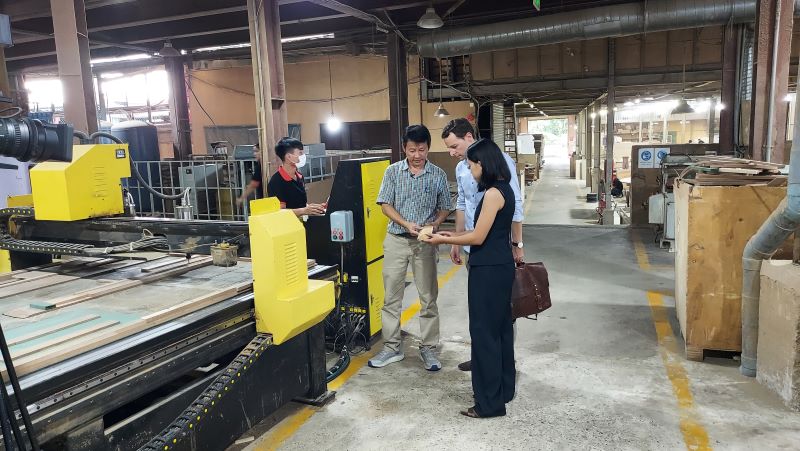
A capable HCMC-based partner can allow you to compress time-to-supplier, run risk-based vetting and AQL inspections, negotiate MOQ/terms, align documentation & compliance for destination markets, and enforce lead-time discipline to manage total landed cost.
These steps reflect best practices repeatedly highlighted in Vietnam-focused sourcing guidance and the country’s tightening product-quality framework
Vietnam remains a compelling alternative for many hardlines and apparel programs, with HCMC offering deep supplier access and show-driven buyer engagement.
The five companies above span SME to enterprise needs—ranging from turnkey buying-office models to targeted factory search and inspection support.
Request like-for-like RFQs, confirm AQL levels and compliance scope, and run a pilot before scaling.
How to start sourcing or outsourcing manufacturing in HCMC
1. Identify and Shortlist Potential Partners
The first step is moving from research to building a list of viable contract manufacturing (CM) or sourcing partners.
- Determine Your Model: Decide if you need Contract Manufacturing (CM) (the factory makes your product according to your spec) or Original Design Manufacturing (ODM) (the factory makes a standard product they designed, and you brand it). CM is generally safer for quality control.
- Target Key Industries: HCMC and its surrounding provinces (Binh Duong, Dong Nai, Long An) are hubs for:
- Garments and Textiles (CMT): Cut, Make, Trim operations.
- Footwear: High volume manufacturing for global brands.
- Furniture and Wood Products: A major global export sector.
- Electronics and Precision Parts: Growing rapidly, driven by major international tech firms.
Other channels outside of hiring your own sourcing agency :
- Trade Shows: Attend major industry fairs in HCMC (e.g., Vietnam Expo, trade shows for specific industries like furniture or textiles) to meet principals face-to-face.
- Online Directories: Use platforms like Alibaba or trade directories, but treat these as initial leads only.
2. Due Diligence and Vetting
A strong partnership is built on verifying capacity, quality systems, and legal compliance *before* signing a contract.
Initial Screening (Remote)
- Request Documentation: Ask for their Business Registration Certificate and export license information to confirm they are legally registered for the activities you require.
- Certifications: Require proof of relevant certifications:
- Quality: ISO 9001 (Quality Management).
- Social/Ethical: SA8000 (Social Accountability), BSCI, or specific customer compliance audits (essential for garments/footwear).
- Environmental: ISO 14001 (Environmental Management) if applicable.
- References: Ask for recent customer references, ideally from your target market (US/EU).
Factory Audit and Site Visit (On-Site)
- Physical Inspection: This is non-negotiable. If you cannot go, hire a local agent to conduct a Factory Audit.
- Key Audit Points:
- Capacity: Do they have sufficient machinery and free capacity to handle your Minimum Order Quantity (MOQ)?
- Quality System: Observe their QC procedures—Are there documented checkpoints? How is raw material inspected? How are defects handled?
- Condition: Assess the cleanliness, organization, and maintenance of the facility (a sign of overall management quality).
- Worker Conditions: Ensure compliance with labor laws, safety standards, and ethical working environments.
3. Contract and IP Protection
Vietnamese law prioritizes local entities, making a clear, legally sound contract essential for a sourcing model.
- Contract Manufacturing Agreement (CMA): Draft a comprehensive CMA that is legally enforceable in Vietnam. This should clearly define:
- Specifications and Tolerances: Detailed 2D/3D CAD files, Bill of Materials (BOM), and material requirements.
- Pricing and Payment Terms: Define currency, Incoterms (e.g., FOB Ho Chi Minh Port), and payment milestones (e.g., deposit, balance upon QC sign-off).
- Exclusivity and IP Protection: Clearly state that your design/tooling/technology remains your property. Register your trademarks and designs with the Intellectual Property Office of Vietnam (IP Vietnam) before production starts.
- Transfer Pricing: If you plan to scale, consult with a tax advisor on transfer pricing regulations, especially if the CM partner becomes a related party.
4. Quality Control and Logistics Management
Effective oversight is necessary to prevent quality decay and supply chain delays.
- Pre-Shipment Inspection (PSI): Always conduct a PSI for the first few orders. Hire a third-party QC firm to inspect a statistically significant sample size based on AQL (Acceptable Quality Limit) standards before the final payment is released.
- Monitor Production: For complex orders, request In-Process Quality Checks and real-time production status updates.
- Shipping and Customs:
- Incoterms: Standard terms like FOB (Free On Board) are common, where the manufacturer delivers the goods to the Ho Chi Minh port, and you handle the international shipping and customs.
- Documentation: Ensure the CM provides accurate commercial invoices, packing lists, and Certificates of Origin (essential for leveraging Free Trade Agreements).
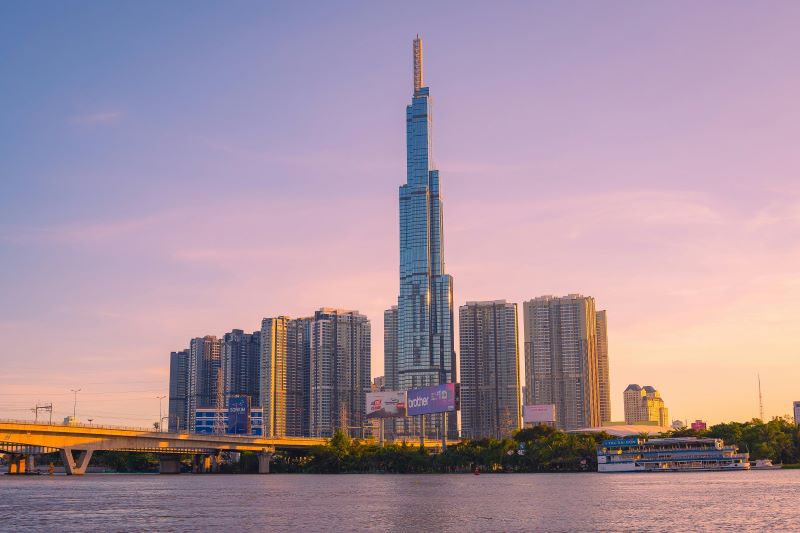
Ho Chi Minh City (HCMC) and its surrounding provinces form a uniquely compelling ecosystem for foreign companies looking to start sourcing or contract manufacturing in Vietnam. This strength lies in its diverse industrial base and unparalleled logistical infrastructure. As the economic engine of Southern Vietnam, HCMC is not dependent on a single sector; instead, it offers established networks for high-volume manufacturing across various consumer-facing industries, including garments, textiles, footwear, high-end furniture, and a rapidly expanding sector of electronics and precision engineering. This blend ensures a robust and mature supply chain, allowing businesses to easily find specialist suppliers for everything from raw material processing to final product assembly, reducing the risks associated with single-source supply chains found in less diversified areas.
The final advantage of HCMC is its role as the nation’s premier commercial and logistics gateway. The city is home to key facilities like the Cat Lai Port, Vietnam’s largest and most modern container port, and is central to major expressways connecting to the nearby industrial powerhouses of Binh Duong and Dong Nai. This concentration of logistics, combined with a large pool of both skilled and unskilled labor and a more internationalized business environment, provides the necessary speed and efficiency for sourcing operations. For a foreign company, this dense blend of mature manufacturers, specialized service providers, and world-class trade infrastructure makes HCMC the single most strategic and reliable starting point for establishing a scalable and resilient manufacturing or sourcing presence in Southeast Asia.