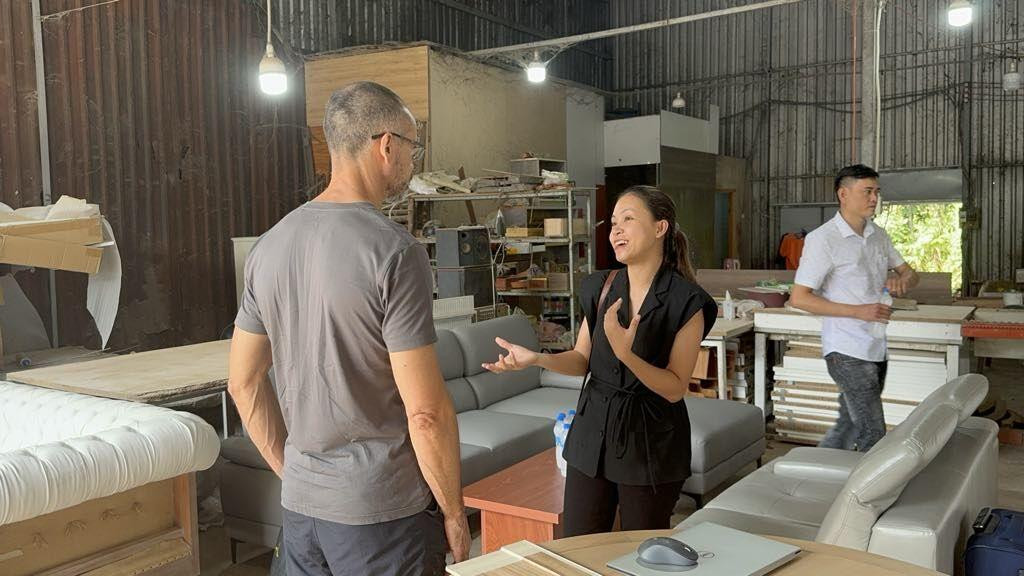
Finding the right contract manufacturer in Vietnam is no longer just about “making it cheaper” : it’s about securing a reliable, scalable, and compliant production partner in one of the fastest-growing industrial hubs in Asia.
Whether you’re a brand owner launching your first product line or an established company diversifying away from a single-country supply chain, Vietnam offers a deep pool of capable factories. The real challenge is not if you can find a manufacturer, but how to identify the right one, validate their capabilities, and build a partnership that actually works long term.
This guide explains how to navigate that process comprehensively, whether you’re a brand owner seeking your first overseas partner or a multinational corporation redirecting parts of your global supply chain to Southeast Asia.
Why Everyone Is Turning to Vietnam for Contract Manufacturing
Over the past decade, the global manufacturing map has undergone a seismic shift. Production, once concentrated in a handful of established countries, is now moving toward markets that offer both competitive costs and reliable industrial capability. Among these emerging destinations, Vietnam has distinguished itself as a truly versatile manufacturing hub.
What makes Vietnam uniquely attractive is not just affordability. It is the ecosystem: an expanding network of industrial parks, a young and motivated workforce, growing technical expertise, modern export infrastructure, and a government that actively supports foreign investment in production. This environment has enabled the country to support a wide range of industries, from furniture and apparel to electronics, metalwork, home goods, and engineered components.
As companies explore alternatives to single-country supply chains, Vietnam stands out as a location where contract manufacturers can produce consistently, scale rapidly, and meet international compliance requirements. But finding the right partner requires far more than browsing through factory listings. It demands a strategy that blends preparation, on-the-ground evaluation, and structured long-term management.
A useful resource covering this dynamic is the industry analysis video :
Understanding Vietnam’s Manufacturing Identity
To find the right contract manufacturer, you must first understand what Vietnam is built to do exceptionally well, and where it still has limitations.
Vietnam’s industrial strengths are shaped by three key characteristics:
hands-on craftsmanship, scalable labor, and rapidly modernizing factory capabilities.
In sectors where precision relies on human skill more than full automation, Vietnam’s results are often excellent. Apparel, footwear, woodworking, packaging, and hand-finished consumer goods have been pillars of the economy for decades. The accumulated expertise of these sectors has translated into a mature supplier ecosystem with specialized clusters supplying raw materials, components, and finishing operations.
Beyond these traditional domains, foreign investment has accelerated Vietnam’s development in mid-level industrial production. Today, factories across Ho Chi Minh City, Binh Duong, Dong Nai, Da Nang, and Hai Phong routinely manage electronics assembly, cable harness production, metal fabrication, plastic injection molding, molded composites, and sub-assemblies for home appliances and industrial devices. Many of these operations run under international certifications and supply well-known global brands.
Vietnam is also increasingly home to companies that engage in OEM and ODM partnerships, offering engineering, prototyping, tooling, assembly, packaging, and logistics under one roof. For businesses that want to outsource complete production cycles, these integrated models can be efficient and cost-effective.
However, Vietnam is not universally optimal. Ultra-high-precision machining, advanced robotics-based manufacturing, and very low-volume specialty parts may still find better options elsewhere. Likewise, products carrying sensitive intellectual property require extra safeguards.
Recognizing these boundaries helps companies focus their search where Vietnam offers the highest performance and reliability.
Preparing Your Company Before Approaching Manufacturers
Finding a contract manufacturer is a two-way process: factories also evaluate whether you are a good fit. The best Vietnamese manufacturers, especially those experienced in exports, tend to prefer clients who come prepared, speak clearly about their needs, and demonstrate long-term intent.
Before starting outreach, companies should ensure internal readiness across several dimensions.
Clarify Your Objectives
Be explicit about why you want a contract manufacturer in Vietnam. Are you seeking diversification? Lower production costs? Improved capacity? Better lead-times? Each reason will shape the type of partner you should target.
Prepare Detailed Technical Information
Vietnamese factories deliver their best work when specifications are precise. This includes drawings, tolerances, finishing standards, material requirements, mechanical or visual performance criteria, packaging instructions, and testing protocols.
Establish a Cost and Feasibility Framework
Unit cost is only one part of the equation. Companies should calculate tooling investment, sample cost, freight, customs duties, warehousing, inspections, and risk mitigation. A thorough breakdown of these elements is explored in the manufacturing white paper, which offers structured guidance for global procurement teams.
Click on the link below to download the white paper: https://go.fvsource.com/vietnam-outsourced-manufacturing
Determine the Ideal Manufacturer Profile
Before contacting anyone, define the type of partner you want:
capacity, certifications, location, engineering capability, communication skills, stability, and strategic alignment. This clarity will guide your search and prevent time wasted on unsuitable factories.
Companies that invest time in these steps begin their Vietnam search from a much stronger position.
The Best Ways to Identify Contract Manufacturers in Vietnam
Choosing the right contract manufacturer begins with knowing where and how to look. Vietnam has a dense landscape of factories, many excellent, some mediocre, and a few to avoid entirely. A structured sourcing approach ensures that only viable candidates make it onto your radar.
Use Industrial Clusters as a Starting Point
Different regions in Vietnam specialize in different product categories. Southern Vietnam tends to lead in furniture, plastics, and consumer electronics. The north, around Hanoi and Hai Phong, is strong in metalwork, heavy electronics, and mechanical components. Central Vietnam supports emerging industries and growing export operations.
Leverage Export-Focused Factories
Factories that already export to the U.S., EU, Japan, or Korea generally maintain higher compliance standards, better documentation, and stronger quality systems. They also tend to communicate more effectively in English.
Engage Third-Party Professionals When Needed
Many companies rely on local sourcing specialists or contract manufacturing service providers to identify reliable factories. These experts maintain ongoing relationships with suppliers and understand how to evaluate capabilities more accurately than online directories can.
Methodology Used for Ranking Contract Manufacturing Consultants
This shortlist comes from a simple but reliable method: reviewing public case studies, analyzing industry feedback, checking operational presence in Vietnam, and comparing which firms truly support end-to-end contract manufacturing rather than superficial sourcing. These five names repeatedly appear in serious discussions among foreign manufacturers and supply-chain professionals.
Top Contract Manufacturing Consultants in Vietnam (2026 Edition)
No ranking is perfect, so you should always perform your own due diligence; but these are consistently recommended by companies already producing in Vietnam.
FVSource: The Engineering-Driven Outsourcing Partner
FVSource is well regarded for its ability to move beyond supplier listing and actually own the industrial process with clients: audits, tooling, DFM/VE, ramp-up, inspections, CAPA, and multi-country benchmarking (Vietnam, Thailand, Indonesia, Malaysia, India).
Their team mixes local engineers and European management, making them strong at structuring reliable Asian production networks.
Why they are recommended: ideal for companies looking to transfer complex production from China or diversify with a structured, disciplined approach.
MoveToAsia: Practical End-to-End Manufacturing Support
MoveToAsia acts like an external buying office for companies that want stable production in Vietnam without building a local team. They excel at factory selection, sample validation, day-to-day production monitoring, and shipment coordination.
They are known for transparent reporting, clear communication, and solid execution on the ground.
Why they are recommended: best for SMEs and brands that want a reliable, operational partner managing their supply chain from A to Z.
Asian Insiders: Senior Guidance for Multi-Country Decisions
Asian Insiders is a network of seasoned consultants helping companies understand which country fits which type of manufacturing before committing. They are strategy-oriented rather than factory-execution-oriented.
They help with risk reviews, supplier identification, and multi-country comparisons across Vietnam, Thailand, Malaysia, and India.
Why they are recommended: excellent for management teams that need high-level guidance before starting a complex Asia manufacturing strategy.
KPMG Vietnam: Compliance, Governance, and Supply-Risk Structuring
KPMG does not run production lines, but they provide the framework that many multinationals need: supplier governance, risk auditing, TCO modeling, ESG compliance, and regulatory guidance.
They help clients make outsourcing safer and more controlled by implementing standards and systems.
Why they are recommended: valuable for large corporations that require formal governance and risk-mitigation tools when expanding production into Vietnam.
Deloitte Vietnam: Supply-Chain Design and Industrial Performance
Deloitte supports manufacturers in designing stronger operating models, selecting suppliers, implementing quality systems, and improving overall supply-chain visibility.
Like KPMG, they focus on structure and transformation, not daily factory supervision.
Why they are recommended: ideal for companies integrating Vietnam into a broader global transformation with digital tools, KPIs, and long-term operational redesign.
Together, they represent the most frequently endorsed profiles for companies structuring or scaling contract manufacturing in Vietnam. Still: talk to them, check their references, and run your own verification: the right partner always depends on your industry, budget, and risk profile.
Send a Structured Inquiry
Once a shortlist is created, outreach must be professional. Manufacturers respond much better to inquiries containing technical documents, volume estimates, and clear project descriptions. Factories that receive vague messages often deprioritize the inquiry.
Understand How Factories Evaluate You
To approach manufacturers effectively, it’s important to understand how suppliers assess potential partners. Factories typically look for clear signals of seriousness : such as precise requirements, realistic order volumes, defined timelines, and an understanding of production constraints. They are more likely to invest time in a partnership when they perceive the buyer as prepared, committed, and aligned with their capabilities. Taking time to understand these expectations before initiating contact will help you manage communication more efficiently and increase your chances of building a productive relationship.
With the right approach, strong candidates emerge quickly. The next step is verifying them in person.
Visiting Factories: The Essential Step Most Companies Underestimate
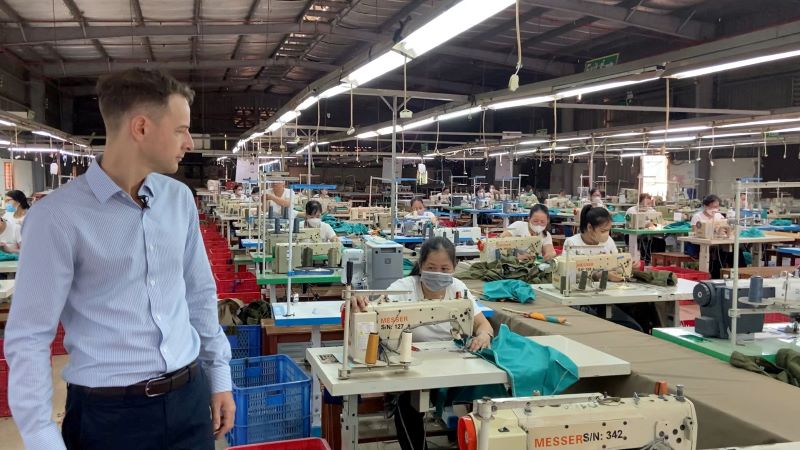
A contract manufacturer cannot be fully evaluated through emails or websites alone. Factory visits are the defining moment of supplier selection in Vietnam.
When you walk onto the production floor, you immediately understand the facility’s true operating level. Machinery condition, layout efficiency, quality checkpoints, cleanliness, safety infrastructure, and worker discipline all reveal crucial information about how the factory is run.
Manufacturers with consistent quality usually demonstrate: orderly materials storage, clear labeling, documented procedures, well-maintained equipment, engaged line supervisors, and traceability systems. These signs indicate maturity and capacity for long-term cooperation.
Once the physical tour is complete, a more formal audit offers a deeper evaluation of the factory’s systems. This audit typically examines defect tracking, calibration methods, sample approval workflows, social compliance, environmental standards, maintenance routines, and the sourcing of raw materials. Even well-organized factories occasionally reveal gaps that need to be addressed before mass production begins.
Conducting these visits respectfully, with clear communication, helps build trust. Vietnamese manufacturers tend to view factory audits not as criticism but as partnership-building tools, especially when expectations are explained openly.
Transitioning From Supplier to Partner: Samples, Tooling, and Pilot Production
After selecting a manufacturer, the project moves into an operational phase that will set the tone for the entire partnership. This phase includes sampling, tooling design, pilot runs, and the establishment of quality systems.
Developing Samples
Your contract manufacturer will first produce samples to confirm understanding of your specifications. These samples must be assessed thoroughly for dimension accuracy, finish, functionality, durability, and packaging. Many companies create a “golden sample” or reference unit, which becomes the standard used to validate future production.
Designing and Verifying Tooling
If tooling is required, such as molds for plastics or dies for metal components, it must be designed carefully. Tooling built in Vietnam can be high-quality, but oversight is essential. Companies should verify materials, engineering design, expected cycle life, cooling systems, tolerances, and maintenance requirements.
Executing a Pilot Run
A pilot production run allows both you and the manufacturer to validate consistency before scaling. It tests workflow, production speed, yield rate, and the factory’s ability to meet shipping schedules. Problems that surface during pilot runs are far easier to fix than those discovered during full-scale production.
Establishing Quality Control Structure
Factories in Vietnam generally welcome structured QC guidelines. Companies should set clear AQL standards, reporting expectations, inspection points, traceability rules, and defect-handling procedures. This clarity becomes an anchor throughout the partnership.
Once these foundations are in place, the contract manufacturer can begin mass production with confidence.
Managing Logistics and Ensuring Smooth Shipping Operations
Vietnam’s logistics infrastructure is robust but requires careful planning. Companies should understand shipping routes, inland transport times, container availability, air freight options, and seasonal patterns that affect scheduling.

Lead times fluctuate depending on factory location, shipping port, and destination country. Sea freight to Europe or North America typically ranges from three to six weeks. Air freight offers faster delivery but at a significantly higher cost, making it ideal for samples or urgent replenishment.
Understanding Vietnam’s calendar is vital. The Tet holiday, for example, can delay shipments significantly, as factories slow down weeks before and after the holiday. Weather patterns and regional transport congestion also affect delivery timelines.
Building strong relationships with freight forwarders, customs brokers, and third-party logistics providers is essential as production scales. Over time, companies often refine their logistics strategy to reduce lead times and improve overall supply-chain performance.
Contract Frameworks, Compliance, and IP Protection
Clear contracts are the backbone of successful contract manufacturing in Vietnam. These agreements outline expectations, protect intellectual property, and define accountability.
Manufacturing contracts typically detail quality criteria, inspection rights, payment terms, production timelines, defect handling, and warranty obligations. They should also address confidentiality and data protection, especially when designs or proprietary technologies are involved.
Intellectual property protection in Vietnam has improved significantly, but companies should remain proactive. Many maintain ownership of molds, register trademarks locally, and restrict access to sensitive information. Transparency is key—setting expectations early reduces misunderstandings later.
Beyond IP, companies must monitor compliance with labor laws, safety procedures, and environmental regulations. Vietnam has made meaningful progress in this area, but supplier oversight remains important for maintaining brand integrity.
Frequent Mistakes and How to Avoid Them
Finding and managing contract manufacturers in Vietnam becomes significantly easier when companies avoid common pitfalls.
One frequent mistake is beginning outreach before preparing detailed specifications, leading to unclear quotations and mismatched expectations. Another is prioritizing low pricing over factory maturity, resulting in unreliable quality or production delays.
Companies also sometimes underestimate how important clear communication is to Vietnamese partners. Manufacturers appreciate structured, concise, and respectful communication and are less responsive to disorganized or abrupt project management styles.
Finally, companies that rely solely on a single supplier expose themselves to unnecessary risk. Establishing at least one backup manufacturer strengthens resilience and helps manage demand spikes.
Creating a Long-Term, High-Performance Partnership
Strong partnerships do not happen by accident. They are built through transparency, consistent communication, and shared goals. The most successful companies treat their Vietnamese manufacturers as collaborators rather than transactional vendors.
Contract manufacturers in Vietnam respond positively to predictability, constructive feedback, and ongoing cooperation. When companies provide clear data, consistent orders, documented SOPs, and long-term visibility, factories often prioritize their projects, invest in better tooling, and allocate stronger production teams.
Over time, these relationships evolve into strategic alliances. Companies that cultivate long-term partnerships benefit from improved reliability, better pricing, and access to faster production scaling.
Vietnam’s manufacturers are eager to grow with their clients, and when supported properly, they become highly dependable components of global supply chains.
Final thoughts
Vietnam has become a cornerstone of modern contract manufacturing, offering a rare mix of economic competitiveness, industrial capability, and flexibility. For companies looking to secure reliable partners, the country provides an environment where competence, cost, and scalability converge.
Finding the right contract manufacturer requires methodical preparation, structured outreach, careful factory evaluation, disciplined audits, and thorough production testing. When these elements align, businesses can unlock substantial operational advantages and create resilient, long-term manufacturing foundations.
Vietnam’s industrial landscape continues to expand in sophistication, driven by foreign investment, a strong export culture, and a highly adaptable workforce. Companies that establish strategic manufacturing partnerships in Vietnam today will be exceptionally well-positioned for the global supply-chain transformations of the coming decade.